 Loading... Please wait...
Categories
Add to Wish List
Related Products


You Recently Viewed...
 New Products
-

$14.99$13.30
-

$11.99$9.99
-

$20.00$15.00
-
$102.12$80.00
-
$135.00$99.00
Our Newsletter
- Home
- Organic Vegetables
- Organic Vegetables - Family Bag - $30
Organic Vegetables - Family Bag - $30


Sorry but this item is currently unavailable.
Please check back at a later stage.
Product Description
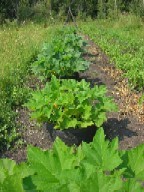
The seasonal certified organic and demeter certified vegetables coming from Chilliwack usually include potatoes, beets, carrots, kale, salad mix, zucchini, squash, tomatoes and beans.
What does certified organic mean?
Producers of certified organic products go through a formal process where a third party – known as a certifying body – verifies that the farm’s production methods follow a prescribed set of organic standards. What that has meant in practice is that an agent from one of the more than 30 certifying bodies active across Canada – which may be private Canadian groups or foreign groups – will visit farms or organic processing facilities and go through an audit to ensure that the producer complies with the standards of practice of that particular certifying body and/or the standards laid out by jurisdictions for which the body is accredited to certify. The current annual fee for this service can be $1,000 or more depending upon the operation, and also requires additional administrative work on the part of the producer.
While Canada has had national organic standards since 1999, these have been voluntary, and as such the standards applied by individual certification bodies were subject to variation. As organic products have gained increasing market prominence a number of jurisdictions including the European Union, Japan, the United States and the province of Quebec have moved to implement governmentally certified organic standards. Some certifying agencies active in Canada certify producers to be in compliance with one or more of these national standards in order to have access to different markets around the world.
Our vegetables are also demeter certified:
Biodynamic Farming is a form of agriculture that focuses on soil health and food quality. In 1924 Rudolph Steiner gave a series of lectures on agriculture and this is where the Biodynamics was born.
A Biodynamic Farm is an Organic farm, but it goes above and beyond the simple practice of producing food without chemicals. All of the most important practices of a well managed sustainable organic farm such as composting, crop rotation & cover cropping are carried out on the Biodynamic Farm. On top of that, the biodynamic farm is viewed as a ‘whole farm organism’, & a series of preparations are used to nourish the farm and the soil health. The Biodynamic Farmer also uses cosmic rhythms when dealing with the day to day activities on the farm.
Many Organic farmers will farm with what is know as the input substitution method. The Farmer will look to non chemical ways to find substitutes for the chemicals that conventional agriculture uses (NPK - Nitrogen, Phosphorus & Potassium). The Biodynamic farm focuses on the health of the farm and the soil, not simply on the short term gains of a high yielding plant. Through proper composting techniques and with the use of the preparations, the Biodynamic farm as a whole becomes healthier and fully functional as a whole farm ecosystem. Once the Biodynamic farm is fully functional, one can achieve a greater yield on a healthier plant, which will result in better quality food.
Find Similar Products by Category

Customers Who Viewed This Product Also Viewed
-

$20.12$19.12 -

$17.99$15.00 -
 $20.00
 -
 $14.99
 -
 $12.00
 -

$27.99$25.00 -
 $6.50
$6.50 -

$10.99$9.71
