Loading... Please wait...
Categories
Add to Wish List
Related Products
 New Products
-
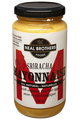 $7.35
$7.35
-
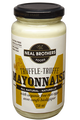 $7.35
$7.35
-
 $7.35
$7.35
-
$175.00$99.99
-
 $6.00
$6.00
Our Newsletter
Connect with us
- Home
- Spices & Seasonings
- Maldon Sea Salt - 240g - $10.99
Maldon Sea Salt - 240g - $10.99


Product Description
Loved by chefs the world over
There is no substitute for Maldon Sea Salt and it is now one of the best recognised brands in the market. Its soft white flaky crystals are free from artificial additives, giving Maldon Sea Salt a distinctive texture and salty flavour, which means less is required. Free from the bitter after-taste often associated with other salts, its characteristic clean fresh taste enhances the flavour of all natural and fine foods.
For over 2000 years the east coast of Essex has played host to the age-old craft of harvesting salt from the sea.
From the Iron age through to Saxon times, the estuaries and surrounding marshes were at the centre of the salt making industry and the reddened earth and broken earthenware pots that form the Red Hills of Essex, are evidence of early salt production. These mounds of industrial waste are remnants of coarse pottery vessels, ash and scorched clay from fires used to heat the sea water.
It is thought that during high tide, sea water was trapped in clay pans cut into the river bank where it was left to partially evaporate in the sun. The resulting brine was transferred into clay pots where it was heated over open fires. When evaporation was complete, the pots were broken open and the salt removed.
The attraction of Essex to the salt making industry remains the same today as it did centuries ago:-
Because of the comparatively low rainfall the environmental conditions in Essex are ideal for salt making. With less fresh rainwater the concentration of salt in the estuaries and rivers is much higher.
As the twice daily tides recede exposing the extensive marshlands and mud flats, a combination of the sun and wind evaporates the sea water leaving salt deposits on the vegetation.
In 1086 the great Domesday survey, recorded no fewer than 45 salt pans in the Maldon area. In the Middle Ages, production techniques became more sophisticated with the salty brine being boiled in pans made of lead known as ‘leddes’.
The thriving salt industry left its mark and is reflected in local place names like Gore Saltings, Saltcote Hall and Salcotte which refers to primitive sheds or ‘salt-cotes’ in which salt was manufactured. The Guild of Saltmakers dates back to 1394 and the sign of the Guild, Three Cups, can still be seen throughout Essex and is a further reminder of its salt trading history.
For hundreds of years salt continued to be skillfully harvested from the sea but in the 19th century the industry in Essex started to decline. From the earliest times salt has always been heavily taxed but in the early 1800s it had risen to £30 a ton. Combined with more economical methods of salt production in Cheshire, the Essex Salt Traders slowly disappeared and to this day, only a single company carrying out this age old tradition has survived - The Maldon Crystal Salt Company.
Uses: It is famously used for salt crusts on fish, general cookery or as a table salt. - See more at: http://www.qualifirst.com/en/sea-salt-flakes-uk-organic-240g-maldon#product-tabs=0
Uses: It is famously used for salt crusts on fish, general cookery or as a table salt. - See more at: http://www.qualifirst.com/en/sea-salt-flakes-uk-organic-240g-maldon#product-tabs=0
Ingredients
Pure crystal sea salt with no additives.
Nutrition
- Serving size – 1/4 tsp.
- Serving size (g/ml) – 1.5 g
- Fat total – 0g
- Fat total daily value – 0%
- Saturated fat – 0g
- Saturated daily value – 0%
- Trans fat – 0g
- Carbohydrate – 0g
- Carbohydrate daily value – 0%
- Carbohydrate fibre – 0g
- Carbohydrate fibre daily value – 0%
- Carbohydrate sugar – 0g
- Sodium – 580mg
- Sodium daily value – 24%
- Cholesterol – 0mg
- Protein – 0g
- Calcium – 0%
- Iron – 0%
- Vitamin a – 0%
- Vitamin c – 0%
Ingredients
Pure crystal sea salt with no additives.
Nutrition
- Serving size – 1/4 tsp.
- Serving size (g/ml) – 1.5 g
- Fat total – 0g
- Fat total daily value – 0%
- Saturated fat – 0g
- Saturated daily value – 0%
- Trans fat – 0g
- Carbohydrate – 0g
- Carbohydrate daily value – 0%
- Carbohydrate fibre – 0g
- Carbohydrate fibre daily value – 0%
- Carbohydrate sugar – 0g
- Sodium – 580mg
- Sodium daily value – 24%
- Cholesterol – 0mg
- Protein – 0g
- Calcium – 0%
- Iron – 0%
- Vitamin a – 0%
- Vitamin c – 0%
Ingredients
Pure crystal sea salt with no additives.
Nutrition
- Serving size – 1/4 tsp.
- Serving size (g/ml) – 1.5 g
- Fat total – 0g
- Fat total daily value – 0%
- Saturated fat – 0g
- Saturated daily value – 0%
- Trans fat – 0g
- Carbohydrate – 0g
- Carbohydrate daily value – 0%
- Carbohydrate fibre – 0g
- Carbohydrate fibre daily value – 0%
- Carbohydrate sugar – 0g
- Sodium – 580mg
- Sodium daily value – 24%
- Cholesterol – 0mg
- Protein – 0g
- Calcium – 0%
- Iron – 0%
- Vitamin a – 0%
- Vitamin c – 0%